


The Maryland Department of Transportation needs to plan and design this program in an environmentally responsible manner. We will strive to avoid and minimize natural, cultural, and community impacts, while mitigating any unavoidable environmental impacts.

Building an Inclusive, Multimodal Future
The American Legion Bridge and 270 Corridor Program is dedicated to enhancing multimodal transportation facilities and elevating travel experiences across the American Legion Bridge and I-270 up to Frederick. Through equitable and long-awaited transportation solutions, our vision is to foster a future where improved travel options are accessible to all within the National Capital Region.

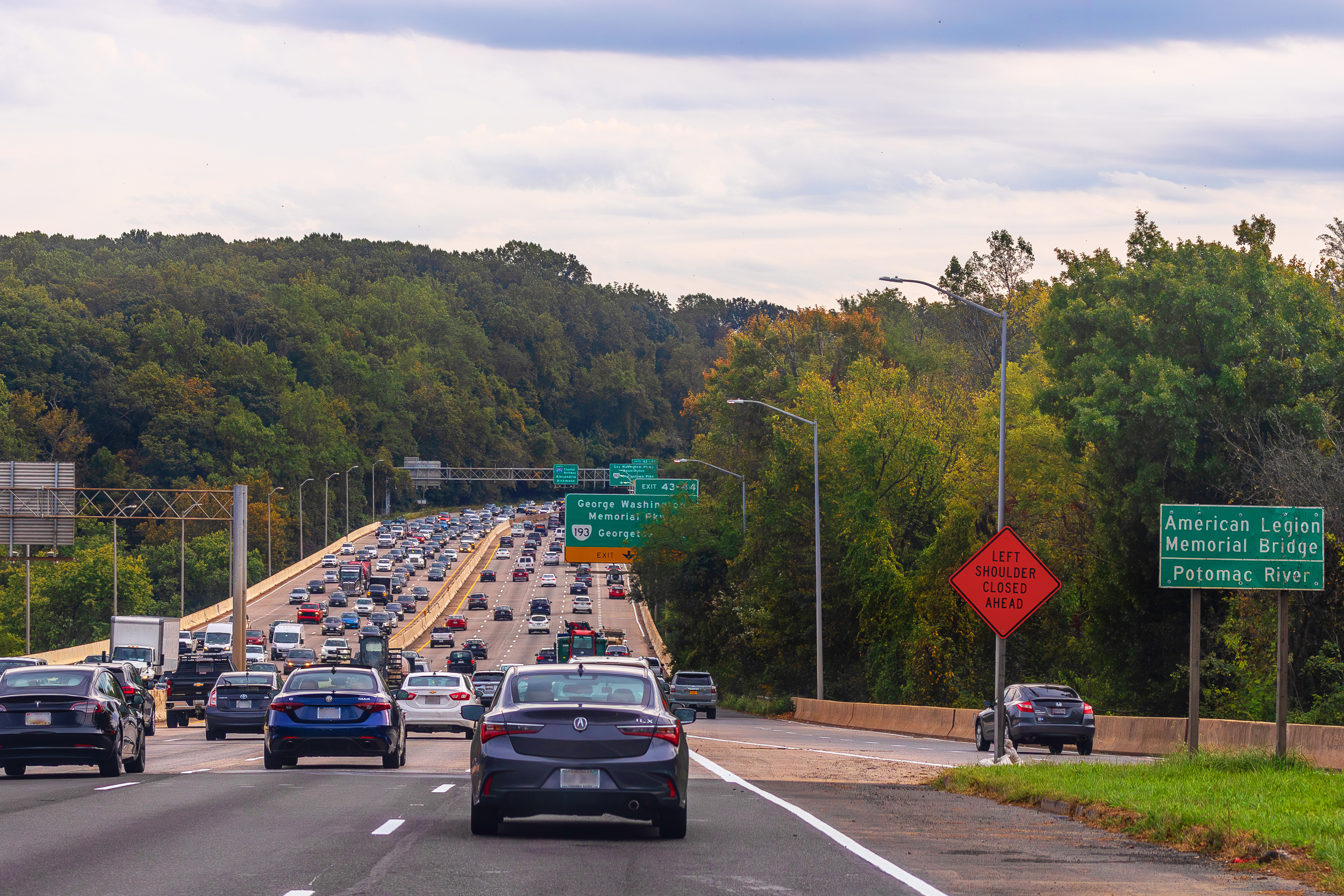
American Legion Bridge

I-495 approaching the American Legion Bridge from Virginia

I-270 north of Clarksburg, Maryland

Transit service parallel to the corridor

New bicycle and pedestrian access and connections
THE PROJECT
$6.5 billion
in expected economic activity
3,000 + jobs
expected to be created
Evaluating delivery approach
MDOT is assessing whether a P3 is the best way to deliver the project. No decision has been made.
American Legion Bridge and I-270 Multimodal Corridor
What the project is, why it is needed, and how Maryland will decide how to deliver it
This is a generational project that is needed to improve the economic and physical mobility of the most congested corridor in Maryland. It will replace the 60+ year old American Legion Bridge, add high occupancy toll lanes, and add new paths, bike lanes, and sidewalks.

Transit and Ridesharing
Maryland will advance transit options and transportation demand management enhancements along the American Legion Bridge, I-495 and I-270 corridors. The program will implement strategies such as express bus options in Maryland and connections to Virginia, ridesharing incentives and parallel transportation improvements including MARC Brunswick Line enhancements and Bus Rapid Transit to create a better connected and more efficient transit network.

Transit-Oriented Development
The Maryland Department of Transportation will advance Transit-Oriented Development (TOD) opportunities throughout the corridors. Maryland has previously supported TOD planning and implementation efforts throughout the WMATA Metrorail system. As part of this program, Maryland will look to accelerate investment in key corridor TOD projects to unlock new developments that create sustainable and inclusive communities.

Bicycle & Pedestrian Improvements
The Maryland Department of Transportation will work with communities to improve bicycle and pedestrian access and safety through new and upgraded connections. This will support active transportation in the corridor and connect transit, rideshare, rail, bicycle, and pedestrian transportation. A key example is the shared-use path crossing the Potomac River on the American Legion Bridge connecting Maryland and Virginia trail networks and the C&O Canal towpath.

American Legion Bridge
Rebuilding the aged American Legion Bridge, which is a vital freight and passenger connection between Maryland and Virginia, is a top priority. While still safe, the bridge is approaching the end of its lifespan and it is not equipped to handle current traffic levels or reliable transit service, bicycles, and pedestrians. A modernized bridge will address a significant system preservation need and enhance the safe and efficient movement of people, goods, and services in the region.

I-270 North Plan
Maryland will launch a formal environmental study to identify the transportation needs of I-270 North of the Intercounty Connector/MD 200, consider a range of concepts including transit and transportation demand management, and evaluate multimodal approaches for near-term implementation and construction.

Phased Approach to Managed Lanes
Implementation of managed lanes will be phased, with the American Legion Bridge, I-495 up to and including the I-270 West Spur being the focus for initial implementation. The section from the I-270 West Spur to I-370, including through the City of Rockville, will be addressed in a later phase. This phasing will allow for a rational and fiscally prudent, phased development.

Protecting our Environment
Will collaborate with federal, state, and local partners to protect our sensitive environmental and cultural resources.

Advancing Choices
Will provide transportation choices for Marylanders and build a multimodal future.

Engaging our Communities
Will engage the community to ensure this project is informed by you as it moves forward.